Meet the trillions of microbes that call you home
You have heard the phrase "gut health" a hundred times, but what is the gut microbiome actually made of, what does it do, and how do you know if yours is out of balance? Here is the plain-English version, with the research linked so you can check it yourself.
Grounded in 5 peer-reviewed studiesThe quick version
Key takeaways
- Your microbiome is a working organ, not a passenger.
- Microbial diversity is one of the better markers of a healthy gut. 3
- No one supplement builds a microbiome; variety of plants and fiber does.
- For probiotics, survival and strain matter more than the CFU number.
01What is the gut microbiome?
The gut microbiome is the community of trillions of microorganisms, mostly bacteria, living in your digestive tract. The bulk of them settle in your colon, packed into a layer of mucus where they ferment the food your own enzymes cannot break down.
Think of it less as a passenger and more as an organ you were not born with. It develops over your first few years of life and keeps changing with your diet, your sleep, your stress, and the medications you take.
It is also deeply personal. No two people carry the same mix of species, not even identical twins raised in the same house. Your particular community was shaped by how you were born, what you ate as a child, the places you have lived, and every course of antibiotics you have ever taken. That is part of why gut advice that works wonders for a friend can do very little for you.
The scale is genuinely hard to picture. Careful cell counts put the number of bacteria in your body on the same order as your own human cells, roughly tens of trillions of each. 1 In a real sense you are about half microbe by cell count, which is why it makes more sense to treat these bugs as part of you than as visitors.
~38T
bacterial cells in your gut
roughly one for every human cell
~70%
of your immune cells live in the gut
your gut trains your defenses
500+
species in a healthy microbiome
diversity is the goal
General figures widely cited in microbiome research. See our science page for the underlying studies.
02What does the gut microbiome do?
Three jobs matter most:
- Finishes digestion. It breaks down the fibers your body cannot, releasing short-chain fatty acids that feed the cells lining your colon. 4
- Makes compounds you cannot, including vitamin K and several B vitamins, as a by-product of fermenting your food. 5
- Trains your immune system. A large share of your immune tissue sits in the gut wall, learning friend from foe. 2
03The gut and the rest of you
For a long time the gut was treated as a straightforward tube: food in, waste out. That picture keeps getting bigger. Your gut is lined with hundreds of millions of nerve cells, so many that researchers sometimes call it a second brain, and it is in constant two-way conversation with the one in your head.
The bacteria are part of that conversation. When they ferment fiber, the short-chain fatty acids they produce do not just feed your colon cells; they ripple outward, influencing everything from how your body handles inflammation to how satisfied you feel after a meal. This is why gut health rarely stays a gut story. It tends to show up in your energy, your mood, and how resilient you feel day to day.
04Signs your gut may be out of balance
There is no home test that settles it, and the at-home kits that promise to grade your microbiome are, for now, more entertaining than diagnostic. What is more useful is paying attention to patterns in how you feel, especially a cluster of these that shows up after antibiotics or a long stretch of poor eating:
- Frequent bloating, gas, or irregularity
- Feeling heavy or sluggish after most meals
- Getting run down more easily than you used to
- Strong sugar cravings that come and go
- One symptom on its own is usually just life. It is the combination, and the fact that it persists, that is worth listening to.
05How to support a healthy microbiome
The unglamorous truth is that no single bottle builds a good microbiome. What moves the needle over months is repeatable and boring:
- Eat a wide variety of plants. Diversity on the plate feeds diversity in the gut.
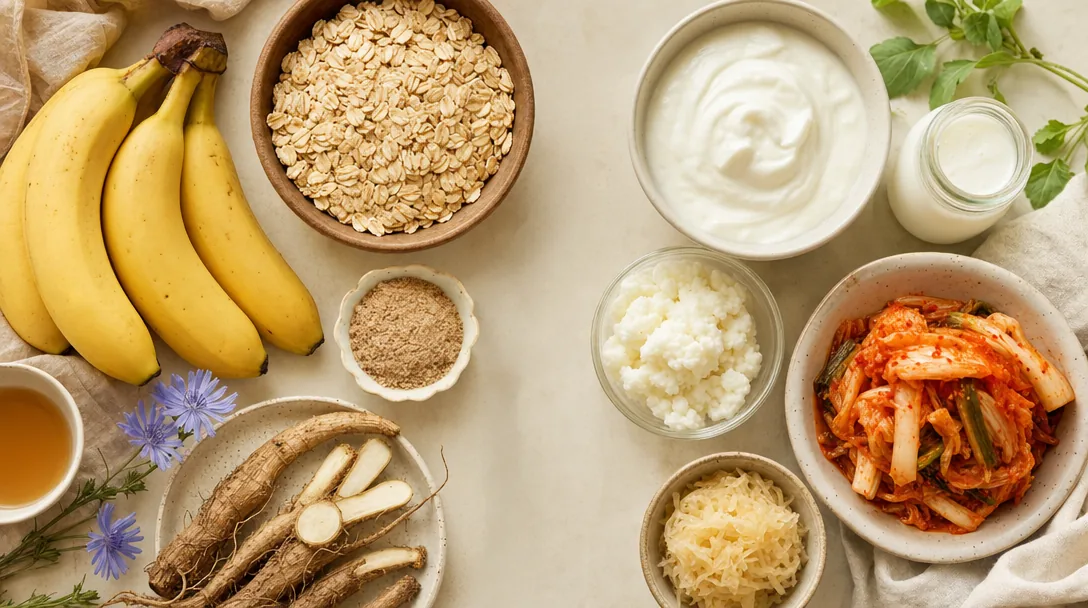
- Add fermented foods you tolerate, like yogurt, kefir, kimchi, or sauerkraut.
- Get enough fiber, and increase it gradually with plenty of water.
- Avoid carpet-bombing your gut with things it clearly dislikes.
06Where probiotics and prebiotics fit
Probiotics add reinforcements; prebiotics are the fiber that feeds the bacteria you already have. Both help, but the honest catch is survival: most probiotic strains are destroyed by stomach acid before they ever arrive.
It helps to think of the two as gardening rather than medicine. Prebiotic fiber is the compost you spread to feed whatever is already growing. Probiotics are the new seedlings you plant on top. Neither does much alone, and both take consistency to show results, which is why a week of trying and quitting almost never changes anything.
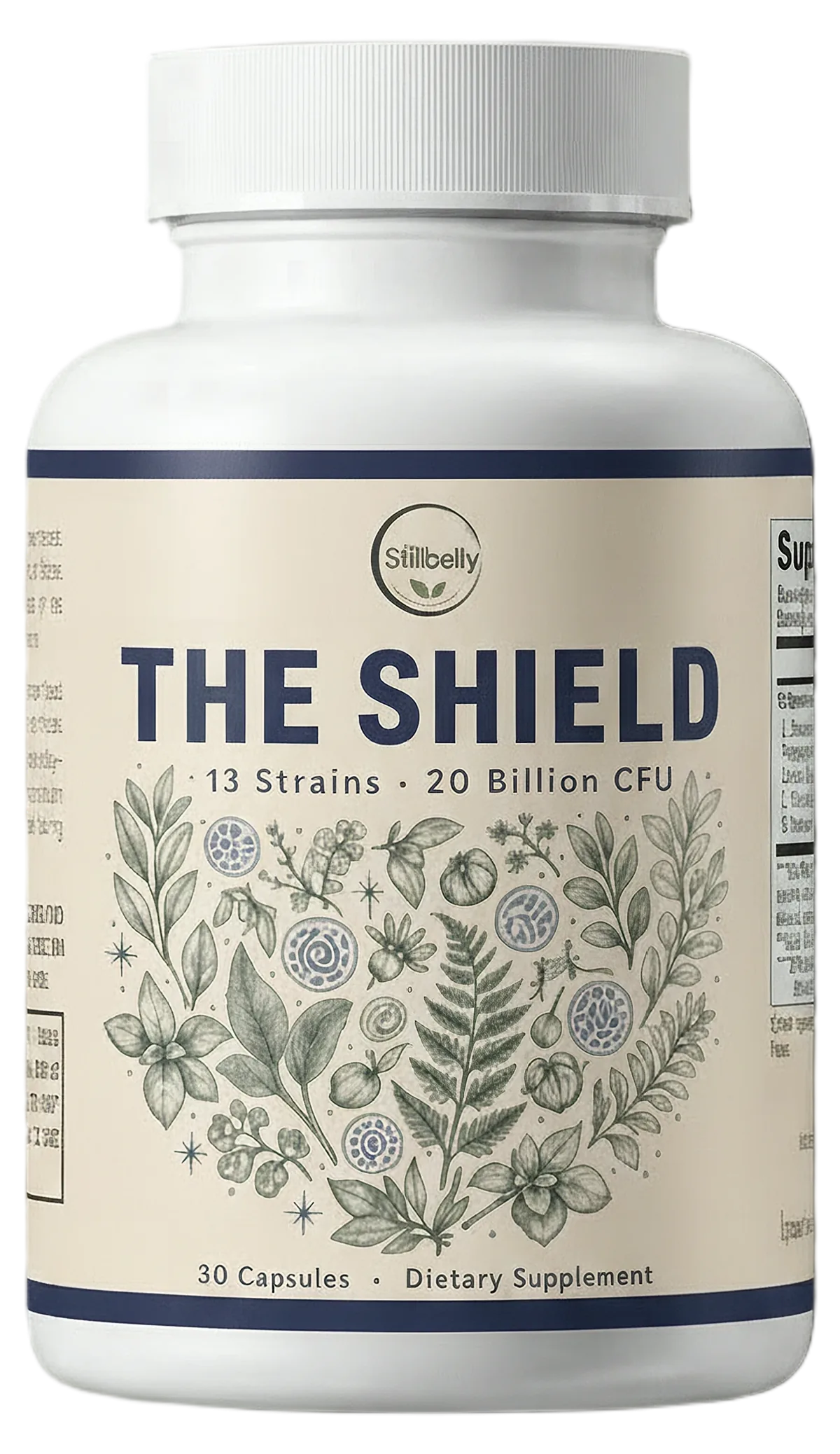
That is the whole reason The Shield is built around thirteen strains chosen to survive the trip, at twenty billion CFU, rather than a big number that never makes it downstream. A count on a label only matters if the bacteria behind it are still alive when they reach the part of you that needs them.
The bottom line
Your gut microbiome is a living organ you feed every day. You cannot buy it in a bottle, but you can garden it: eat the plants, get the fiber, and let a well-chosen probiotic fill the gaps.
From this article
The Shield
13 strains, 20 billion CFU, built to survive the trip.
Shop →Frequently asked questions
What is the gut microbiome in simple terms?
It is the community of trillions of bacteria living mostly in your colon that help digest food, make certain vitamins, and train your immune system.
How do I know if my gut is unhealthy?
There is no perfect home test, but frequent bloating, irregularity, feeling run down, and sluggish digestion, especially after antibiotics, are common signs worth watching.
Can probiotics fix my gut?
Probiotics can help add beneficial bacteria, but they work best alongside a varied, fiber-rich diet, and only if the strains survive stomach acid. They are a supplement to good habits, not a cure.
How long does it take to improve gut health?
Diet changes can shift the microbiome within days, but meaningful, lasting improvement is usually a matter of consistent weeks to months.
Peer-reviewed & published in






Bacterial cells are on the same order as human cells
Sender R, Fuchs S, Milo R
Read the 2016 studyA large share of immune tissue resides in the gut
Vighi G et al.
Read the 2008 studyMicrobial richness tracks with metabolic health
Le Chatelier E et al.
Read the 2013 studyShort-chain fatty acids nourish colon cells
Wong JMW et al.
Read the 2006 studyGut bacteria synthesize vitamin K and B vitamins
Rowland I et al.
Read the 2018 studySources are peer-reviewed research on the topics discussed, not studies of finished Stillbelly products. These statements have not been evaluated by the FDA.
Educational content, not medical advice. These statements have not been evaluated by the FDA. Talk to your healthcare provider about persistent digestive symptoms.