Prebiotics vs probiotics: the difference, explained
Prebiotics vs probiotics: the two words look almost identical and get mixed up constantly, but they are not the same thing at all. One is live bacteria; the other is the fiber that feeds them. Here is the difference in plain terms, and why you want both.
Grounded in 3 peer-reviewed studiesThe quick version
Key takeaways
- Probiotics are live bacteria; prebiotics are the fiber that feeds them.
- Probiotics add residents; prebiotics feed the ones you have.
- Most people benefit from both, and diet can supply both.
- For probiotics, survival and named strains beat a big CFU number.
01What are probiotics?
The scientific consensus defines probiotics as live microorganisms that, given in adequate amounts, confer a health benefit. In plain terms: beneficial bacteria that add to the community already living in your gut. 1 Think of them as reinforcements, specific strains at a specific dose.
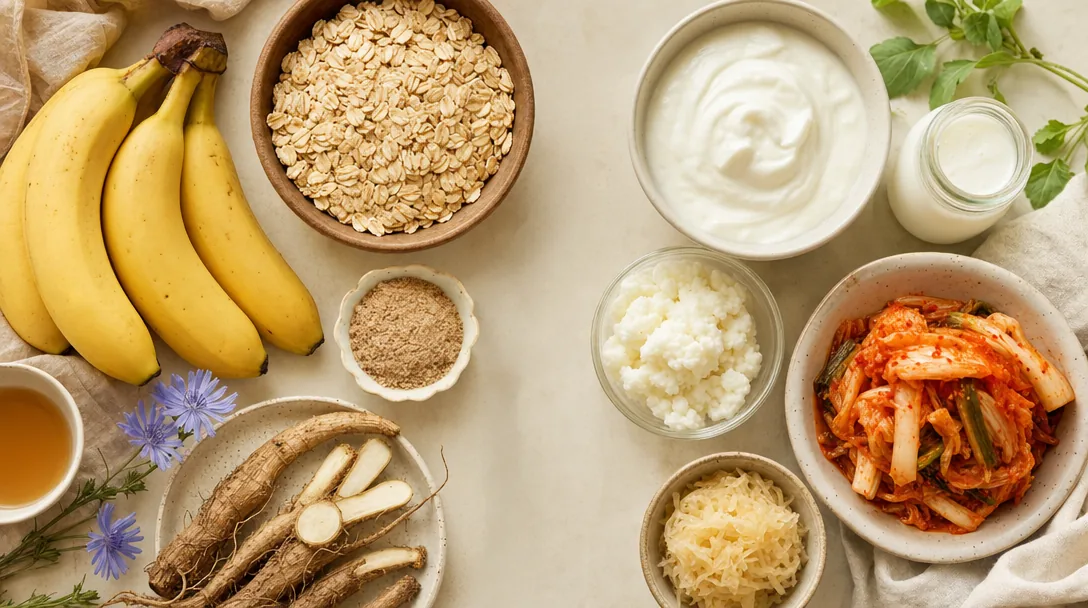
You get them from fermented foods like yogurt, kefir, and kimchi, and from supplements built around defined strains. The catch, and it is a big one, is survival. Most probiotic bacteria are fragile, and stomach acid destroys a lot of them before they ever reach the gut.
02What are prebiotics?
Prebiotics are not alive. The consensus definition is a substrate selectively used by your gut microbes to your benefit; in practice, a specific kind of fiber your own body cannot digest but your bacteria can. 2 When they ferment it, they thrive and produce compounds that nourish the cells lining your colon.
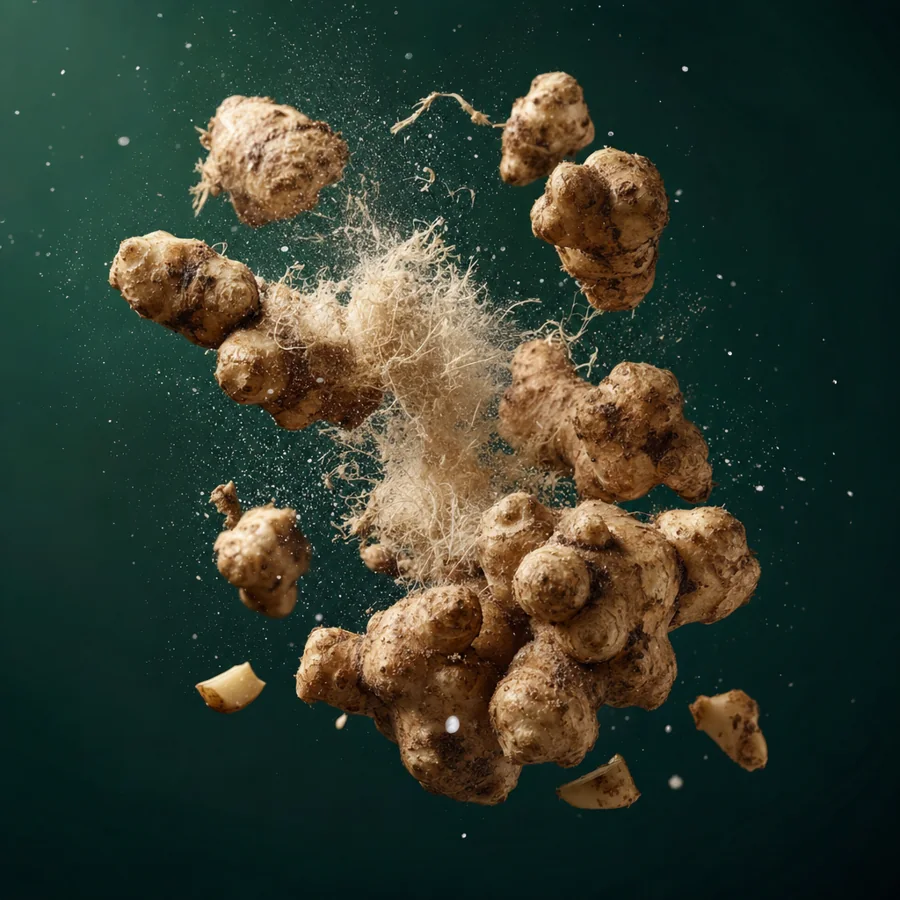
Common prebiotics include inulin from chicory root, plus the fiber in onions, garlic, leeks, oats, and legumes. If probiotics are the seedlings, prebiotics are the fertilizer that helps everything already planted actually grow.
Prebiotics
The food
fiber that feeds your good bacteria

Probiotics
The bacteria
live strains that join the community
Prebiotics feed the bacteria. Probiotics are the bacteria. A good gut routine uses both, not one or the other.
03The key difference, in one line
Probiotics are the bacteria. Prebiotics are what the bacteria eat. That single distinction clears up most of the confusion, and it explains why adding probiotics without feeding them, or eating plenty of fiber with no beneficial bacteria to use it, each leaves half the job undone.
- Probiotics add new residents to your gut.
- Prebiotics feed the residents you already have, plus the new ones.
- Together they do what neither does well alone.
04Do you need both?
For most people, yes, and a varied diet delivers both without much effort: fermented foods for the cultures, fibrous plants for the fuel. A product that pairs them is sometimes called a synbiotic, which is just shorthand for bacteria plus their food in one place. 3
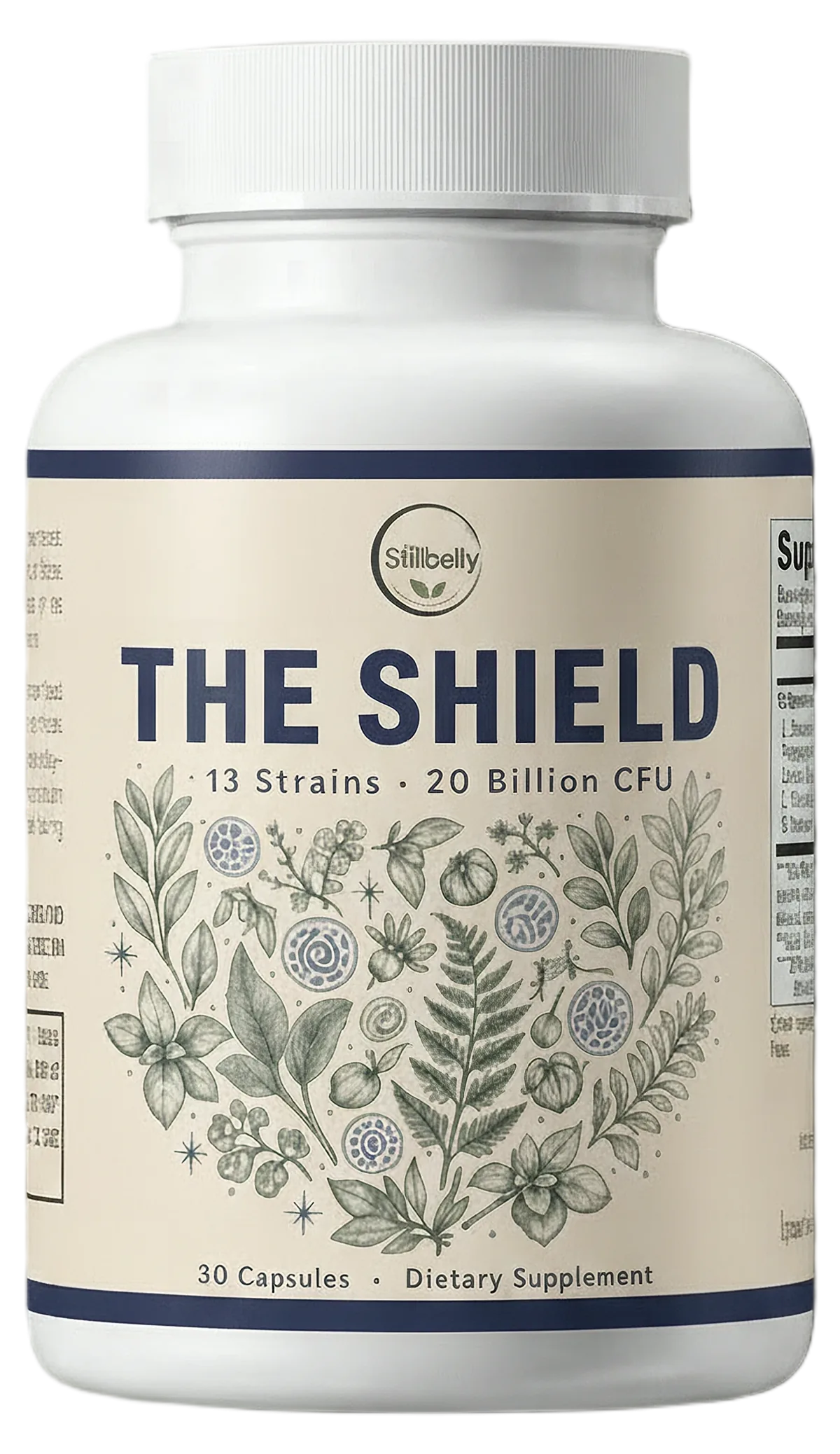
Supplements earn their keep on the days diet falls short. The Shield brings the probiotic side, thirteen strains chosen to survive the trip, while prebiotic fiber from your plate, or from a product like The Cleanse, keeps them fed.
05How to choose
- For probiotics, look for named strains and a stated CFU count, and prefer formats built to survive stomach acid.
- For prebiotics, favor whole-food fiber first, and increase any supplement gradually with water.
- You do not need the highest number on the shelf. You need bacteria that arrive alive and fiber you will actually keep eating.
Free tool
How much fiber do you need?
On a normal day, how many of each?
Vegetables
1 = a cup of salad or ½ cup cooked
Whole fruit
1 = an apple, banana, or a cup of berries
Whole grains
1 = a slice of bread or ½ cup oats/rice
Beans, lentils, peas
1 = ½ cup cooked
Nuts & seeds
1 = a small handful
25g
your daily target
13g
your estimate
12g
short per day
You're well short, which is true for most people. Build up slowly, with water.
Estimates only, for general education. Targets follow U.S. dietary guidance (about 25g/day for women and 38g/day for men under 50, a little less after 50). Not medical advice.
The bottom line
Probiotics are the bacteria; prebiotics are their food. You do not choose between them, you use both, and a varied diet quietly supplies each.
From this article
The Shield
The probiotic half of the equation, delivered alive.
Shop →Frequently asked questions
What is the difference between prebiotics and probiotics?
Probiotics are live beneficial bacteria that add to your gut community. Prebiotics are a type of fiber that feeds those bacteria. One is the bacteria, the other is their food.
Should I take prebiotics or probiotics first?
You do not have to choose between them; they work together. A varied diet supplies both, and many supplements combine them. If anything, feed and populate at the same time.
Can you take prebiotics and probiotics together?
Yes. Taken together they are sometimes called a synbiotic. The prebiotic fiber gives the probiotic bacteria something to eat, which helps them establish.
What foods are prebiotics and probiotics?
Prebiotic foods include chicory root, onions, garlic, oats, and legumes. Probiotic foods include yogurt, kefir, kimchi, and sauerkraut with live cultures.
Peer-reviewed & published in


Expert consensus definition of probiotics
Hill C et al.
Read the 2014 studyExpert consensus definition of prebiotics
Gibson GR et al.
Read the 2017 studyExpert consensus definition of synbiotics
Swanson KS et al.
Read the 2020 studySources are peer-reviewed research on the topics discussed, not studies of finished Stillbelly products. These statements have not been evaluated by the FDA.
Educational content, not medical advice. These statements have not been evaluated by the FDA. Talk to your healthcare provider about persistent digestive symptoms.