The best time to take a probiotic
When is the best time to take a probiotic, morning or night, with food or on an empty stomach? You will find confident answers in every direction online. Here is what the timing actually changes, and the two things that matter far more than the clock.
Grounded in 3 peer-reviewed studiesThe quick version
Key takeaways
- The best time is the time you will take it consistently.
- With or just before a meal gives fragile strains an easier passage.
- Morning vs night barely matters; a fixed daily anchor does.
- Strain survival and consistency outweigh timing by a wide margin.
01The short answer
The best time to take a probiotic is whenever you will actually take it, every single day. A probiotic you remember at 8pm beats a probiotic you were supposed to take at 7am and skipped. Habit is the whole game.
Everything after this is optimization at the margins. Useful if the habit is already locked in, close to irrelevant if it is not.
02With food or on an empty stomach?
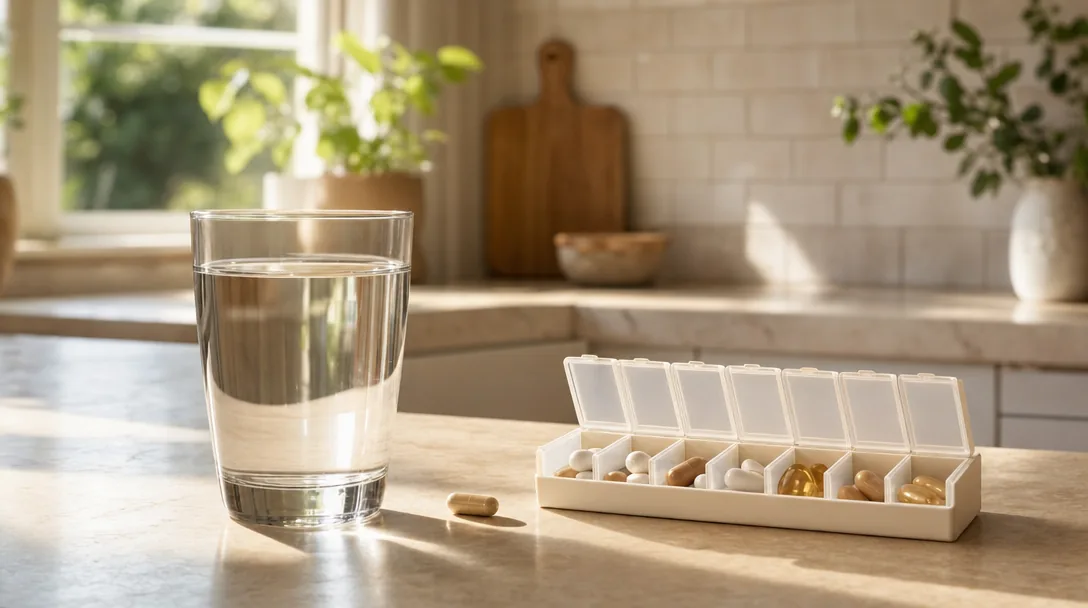
This is the question people argue about most. The practical answer is that taking a probiotic with or just before a meal can help, because food buffers stomach acid and gives fragile bacteria an easier passage. 1
A light meal or snack is plenty. You do not need to engineer the perfect plate around it. And if a strain is genuinely built to survive stomach acid, this matters even less.
03Morning or night?
There is no strong, consistent evidence that morning or evening is meaningfully better for the average person. What is consistent is that a fixed anchor helps the habit stick.
So pick the meal you never skip and attach your probiotic to it. For most people that is breakfast or dinner, whichever is more reliably part of the day.
20B
CFU in The Shield, chosen to survive
count only matters if they arrive alive
Daily
consistency beats perfect timing
the same slot every day wins
~2 wk
before you fairly judge results
give any probiotic a real trial
Figures reflect The Shield and general probiotic guidance. Timing helps at the margins; consistency and survival do the heavy lifting.
04What matters more than timing
Two things outweigh the clock, and it is not close:
- Survival. Whether a probiotic reaches your gut alive depends heavily on the strain and dosage form, far more than on the hour you take it. 23
- Consistency. The microbiome responds to steady, repeated input, not to one well-timed dose.
- Patience. Give any probiotic a couple of weeks of daily use before you decide whether it is doing anything.
05Building the routine
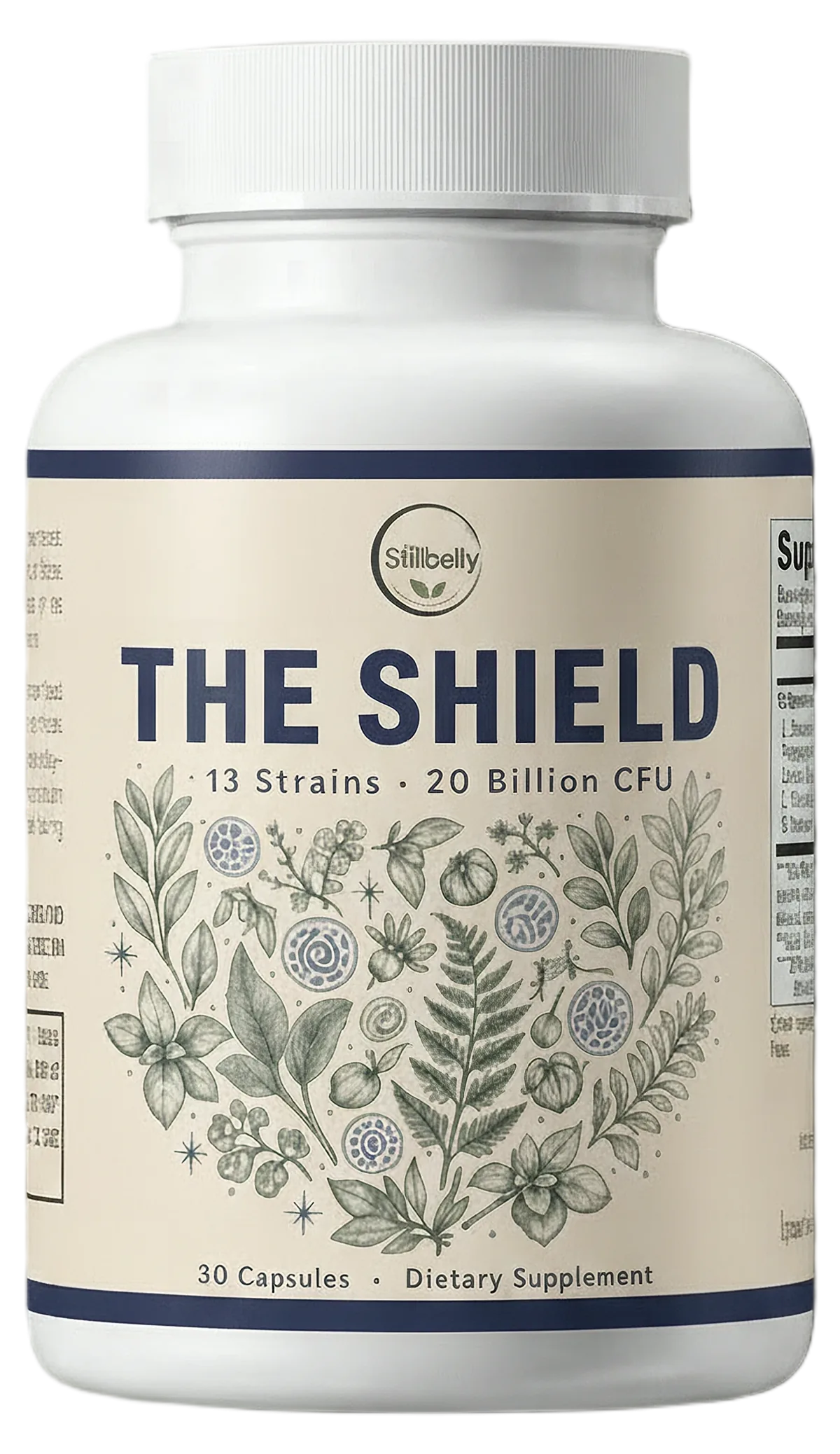
Keep the bottle where you will see it at your anchor meal, take it at the same time each day, and stop overthinking the exact minute. The Shield is built around strains chosen to survive the trip, which is the part timing cannot fix, so the only job left to you is showing up daily.
The bottom line
The best time to take a probiotic is whenever you will take it every day. Attach it to a meal you never skip, choose a strain built to survive, and let consistency do the work.
From this article
The Shield
Strains chosen to survive, so timing is the easy part.
Shop →Frequently asked questions
When is the best time to take a probiotic?
The best time is whenever you will take it consistently every day. Taking it with or just before a meal can help buffer stomach acid, but daily consistency matters far more than the exact hour.
Should I take a probiotic with food or on an empty stomach?
Taking it with or just before a light meal can help, because food buffers stomach acid and eases the bacteria's passage. If your strains are built to survive stomach acid, this matters even less.
Is it better to take a probiotic in the morning or at night?
There is no strong evidence favoring either for most people. Attach it to a meal you never skip so the habit sticks, whether that is breakfast or dinner.
How long does a probiotic take to work?
Give it at least a couple of weeks of daily use before judging results. The microbiome responds to steady, repeated input rather than a single dose.
Peer-reviewed & published in



Taking a probiotic with a meal improved survival through gastric transit
Tompkins TA, Mainville I, Arcand Y
Read the 2011 studySurvival through stomach acid depends on strain and dosage form
Caillard R et al.
Read the 2017 studyGastrointestinal-transit viability is strain-specific
Masco L et al.
Read the 2007 studySources are peer-reviewed research on the topics discussed, not studies of finished Stillbelly products. These statements have not been evaluated by the FDA.
Educational content, not medical advice. These statements have not been evaluated by the FDA. Talk to your healthcare provider about persistent digestive symptoms.