Should you take probiotics with antibiotics?
Should you take a probiotic while you are on antibiotics? It is one of the few probiotic questions with solid trial evidence behind it, plus one important caveat most articles skip. Here is what the research supports and how to do it sensibly.
Grounded in 3 peer-reviewed studiesThe quick version
Key takeaways
01Why antibiotics hit your gut
Antibiotics are not precise. While clearing the bacteria making you ill, they also wipe out large numbers of the helpful residents in your gut. That collateral damage is why courses so often come with diarrhea, cramping, and lingering digestive upset, and the microbiome can take months to fully recover afterward. 3
02Do probiotics actually help?
Here the evidence is unusually solid. A large meta-analysis of clinical trials found that taking probiotics alongside antibiotics meaningfully reduced the risk of antibiotic-associated diarrhea. 1 This is one of the better-supported uses of probiotics there is.
~42%
lower risk of antibiotic-associated diarrhea
with probiotics, in a meta-analysis
~2 hrs
gap between antibiotic and probiotic doses
so the antibiotic does not kill it
Months
the microbiome can take to recover
after a single course
Figures from pooled clinical trials and microbiome research. Talk to your doctor or pharmacist about your specific antibiotic.
03The important caveat
It is not entirely one-sided. One notable study found that a general probiotic actually delayed the return of people's own native microbiome after antibiotics, compared with letting it recover on its own. 2 The practical takeaway is not 'never', it is that probiotics help most clearly with the diarrhea symptom, while full ecosystem recovery is its own, slower process.
04How to take them, if you do
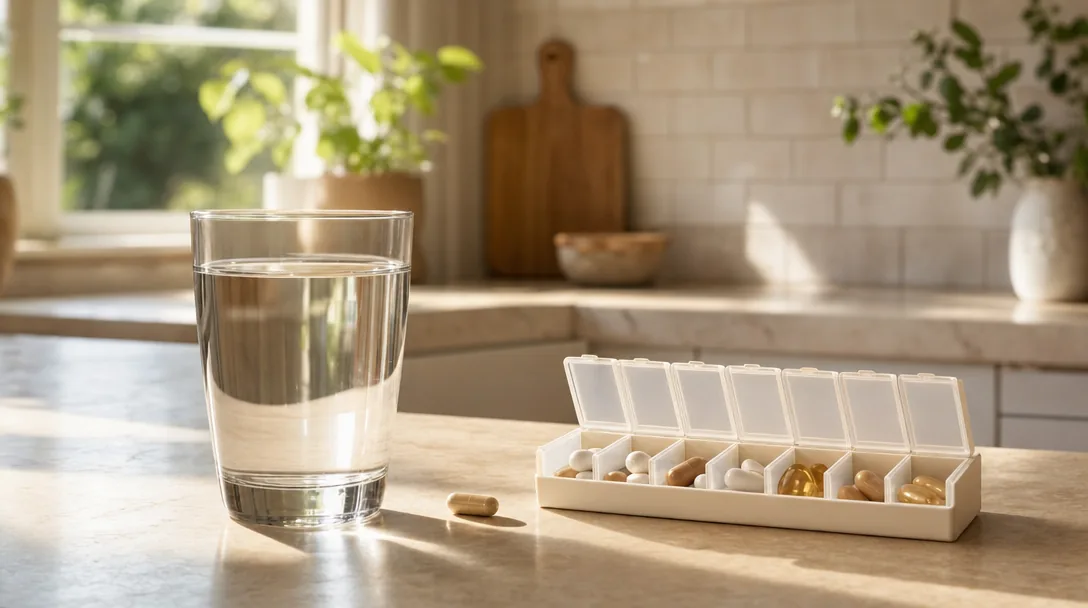
- Separate the probiotic from the antibiotic by about two hours, so the antibiotic does not immediately kill it.
- Keep taking the probiotic for a couple of weeks after the course, not just during.
- Support recovery with fiber and varied plants, which feed your returning residents.
- Ask your doctor or pharmacist, especially if you are immunocompromised.
The bottom line
For the diarrhea that antibiotics often cause, a probiotic has real trial support. Space it a couple of hours from your antibiotic, keep it up afterward, and feed your gut to help it rebound.
From this article
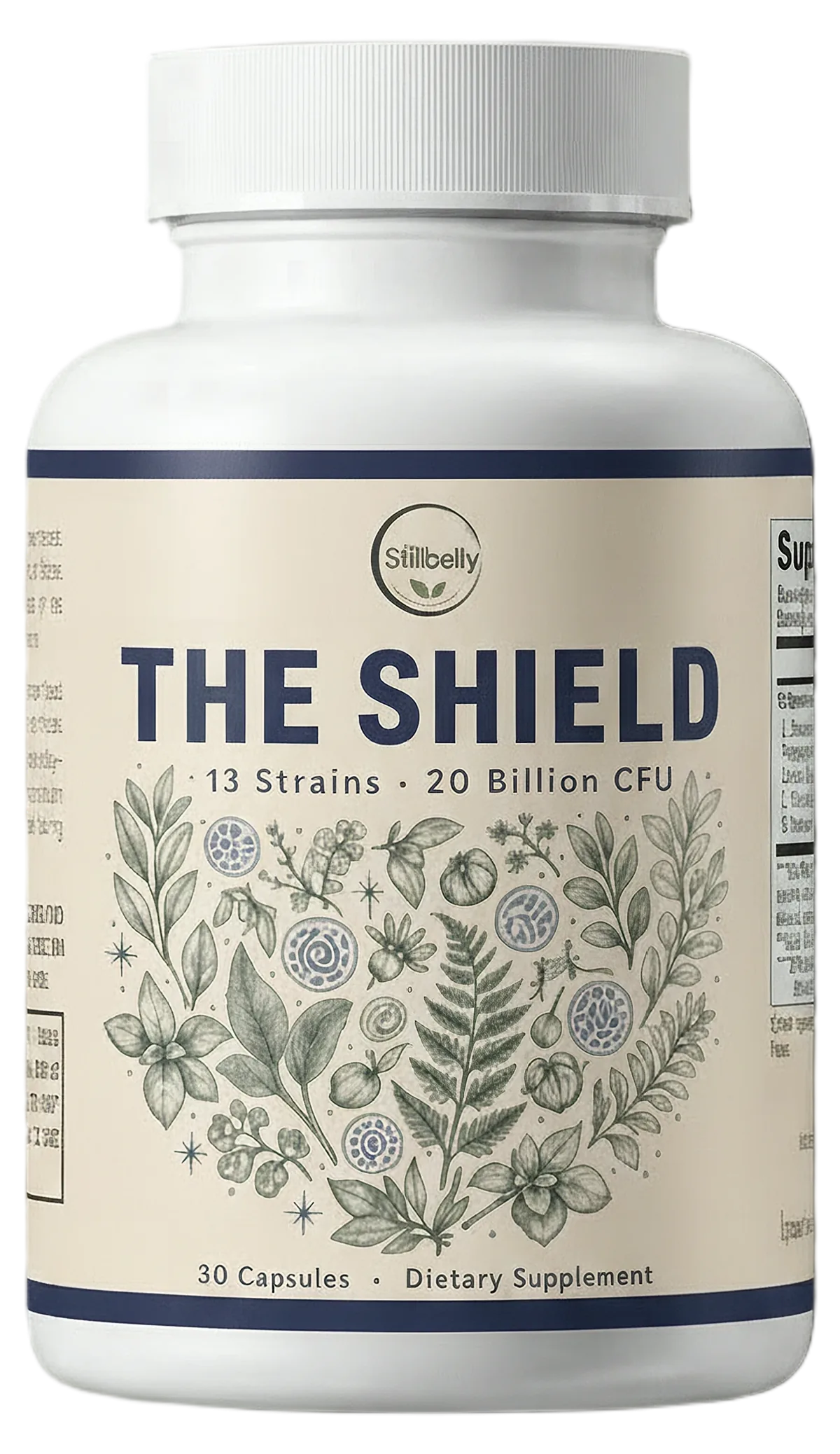
The Shield
Reinforcements for the days your gut takes a hit.
Shop →Frequently asked questions
Should I take probiotics with antibiotics?
For many people, yes. Pooled clinical trials show probiotics reduce the risk of antibiotic-associated diarrhea. Separate the probiotic from the antibiotic by about two hours, and check with your doctor if you are immunocompromised.
When should I take a probiotic if I'm on antibiotics?
Take it about two hours apart from your antibiotic dose so the antibiotic does not immediately kill the probiotic bacteria, and continue for a couple of weeks after the course ends.
Do antibiotics kill probiotics?
They can, which is why timing matters. Spacing the doses a couple of hours apart helps the probiotic survive long enough to do its job.
How long does it take for gut bacteria to recover after antibiotics?
Research suggests the microbiome can take months to return toward its original state after even a single course, which is why supporting it with fiber and variety afterward is worthwhile.
Peer-reviewed & published in




Probiotics reduced the risk of antibiotic-associated diarrhea in a meta-analysis
Hempel S et al.
Read the 2012 studyA probiotic delayed reconstitution of the native microbiome after antibiotics
Suez J et al.
Read the 2018 studyThe gut microbiome is disrupted by antibiotics and recovers only partially over months
Palleja A et al.
Read the 2018 studySources are peer-reviewed research on the topics discussed, not studies of finished Stillbelly products. These statements have not been evaluated by the FDA.
Educational content, not medical advice. These statements have not been evaluated by the FDA. Talk to your healthcare provider about persistent digestive symptoms.