How to read a supplement label
The prettiest part of a supplement is the front of the bottle, and it is the least useful. Everything that actually matters is on the back. Here is how to read a supplement label so the marketing stops working on you.
Grounded in 2 peer-reviewed studiesThe quick version
Key takeaways
- The back of the bottle matters more than the front.
- Look for specific named ingredients and stated doses.
- For probiotics, the exact strain matters, not just species. 1
- Proprietary blends usually hide underdosing.
01Why labels are confusing on purpose
Some label confusion is regulation; some is deliberate. A brand that is underdosing an ingredient, or leaning on a cheap one, has every incentive to make that hard to see. The good news is that the tricks are predictable once you know them.
02Look for named ingredients and stated doses
For any active ingredient, you want two things: the specific identity and the amount. For probiotics that means the exact strain, because benefits are strain-specific, not just the species. 1 For everything else it means the dose in milligrams, ideally matching what the research used.
Named
ingredients should be
specific strains and forms, not vague genus
Stated
every dose should be
in mg or CFU, per serving
A flag
proprietary blends should be
they hide the individual amounts
The Supplement Facts panel is where transparency shows up, or doesn't.
03The proprietary blend trick
A proprietary blend lists several ingredients together under one total weight, without the individual amounts. It is sold as protecting a secret formula. In practice it usually hides how little of the expensive, active ingredients you are getting, padded out with cheap filler. Dose transparency and probiotic dose-response both matter too much to leave blank. 2
04A quick label checklist
- Every active ingredient is named specifically (strain or form).
- Every dose is stated per serving, not buried in a blend.
- Doses look like the ones in the research, not a fairy dusting.
- The serving size is realistic, not two or three capsules to hit the number.
The bottom line
Read the back, not the front. Named ingredients and stated doses mean you can judge a product; a proprietary blend means you are trusting the label to be honest for you.
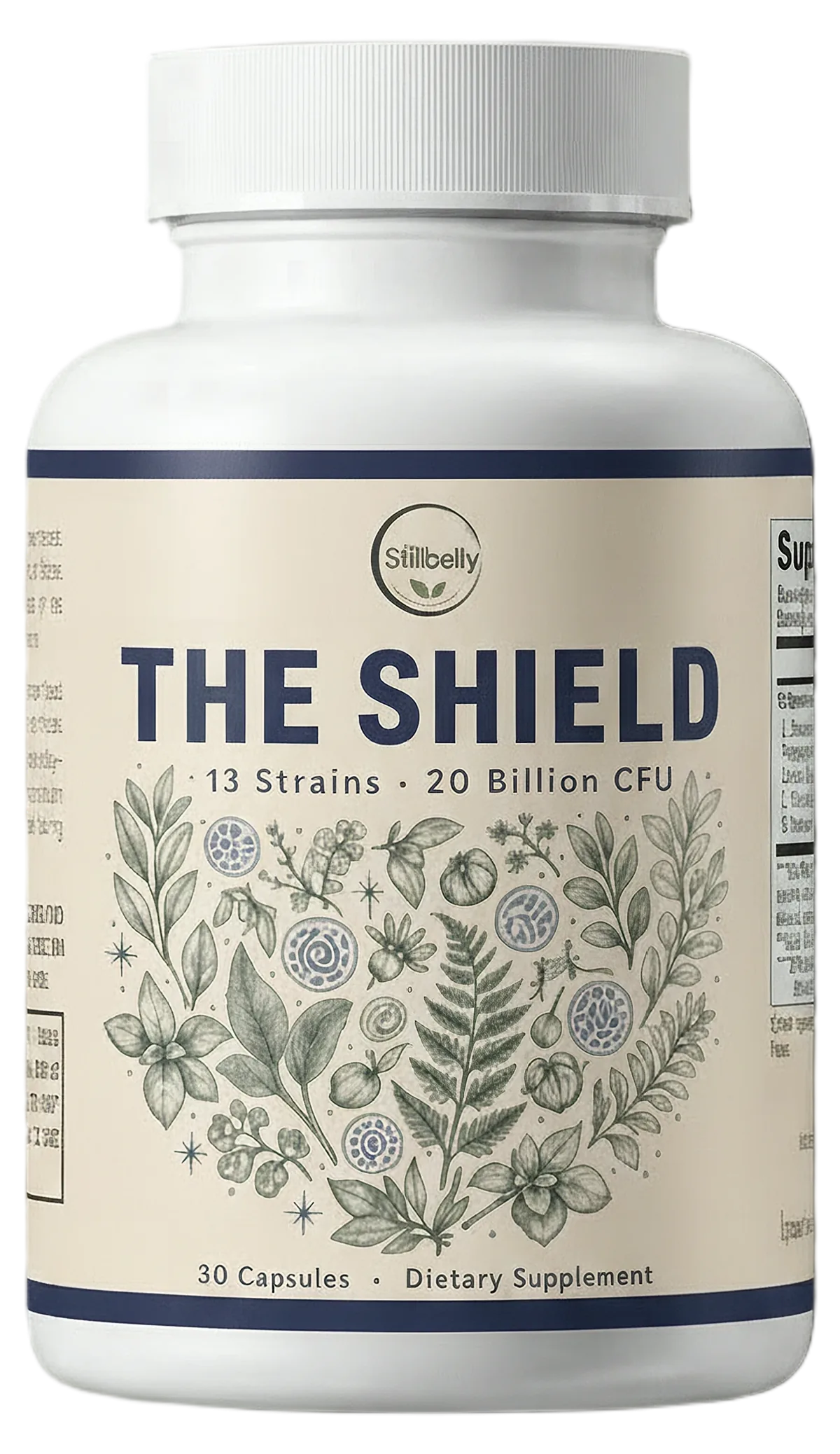
From this article
The Shield
Every strain and dose printed on the label.
Shop →Frequently asked questions
How do you read a supplement label?
Focus on the Supplement Facts panel on the back. Check that each active ingredient is named specifically and that each dose is stated per serving. Compare those doses to what the research used.
What is a proprietary blend?
A proprietary blend lists several ingredients under one combined weight without the individual amounts. It hides how much of each ingredient you are getting and often masks underdosing.
What should I look for in a probiotic label?
Named strains (not just the species), the CFU per serving, and ideally a potency guaranteed through the expiration date rather than only at manufacture. Strain identity matters because benefits are strain-specific.
Are supplement labels regulated?
Supplements are regulated differently from drugs, and claims are limited, but dose transparency is largely a choice the brand makes. A clear, fully-dosed label is a sign of a company willing to be judged on its formula.
Peer-reviewed & published in



Probiotic benefits are strain-specific (expert consensus)
Hill C et al.
Read the 2014 studyProbiotic dose-response is endpoint-specific, so stated doses matter
Ouwehand AC
Read the 2017 studySources are peer-reviewed research on the topics discussed, not studies of finished Stillbelly products. These statements have not been evaluated by the FDA.
Educational content, not medical advice. These statements have not been evaluated by the FDA. Talk to your healthcare provider about persistent digestive symptoms.